Trainings
Below you’ll find the training courses from our catalog. We can also design customized training programs in systems engineering or modeling tailored to your company’s needs. Feel free to reach out!

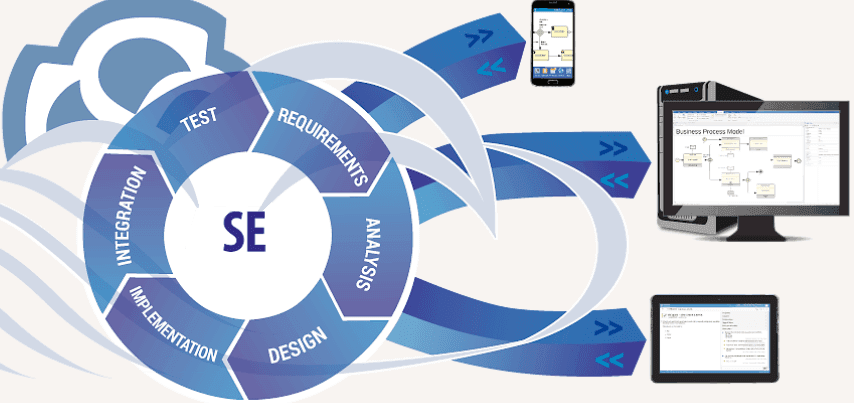
Introduction to Systems Engineering SE
Tip
The next session takes place on June 2nd. You can register today by clicking here
Provide participants with a comprehensive understanding of the principles, methods, and challenges related to the design and management of complex systems. Through theoretical input and concrete examples, participants will discover how systems engineering helps structure projects, manage requirements, and foster collaboration among various stakeholders.
Introduction to SysML v2
Tip
The next session takes place on June 3rd. You can register today by clicking here
This introductory day on SysML v2 provides an opportunity to discover the language, its fundamental concepts, and its contributions to the modeling of complex systems. Through concrete examples, it prepares participants to integrate SysML v2 into an agile and collaborative MBSE approach.
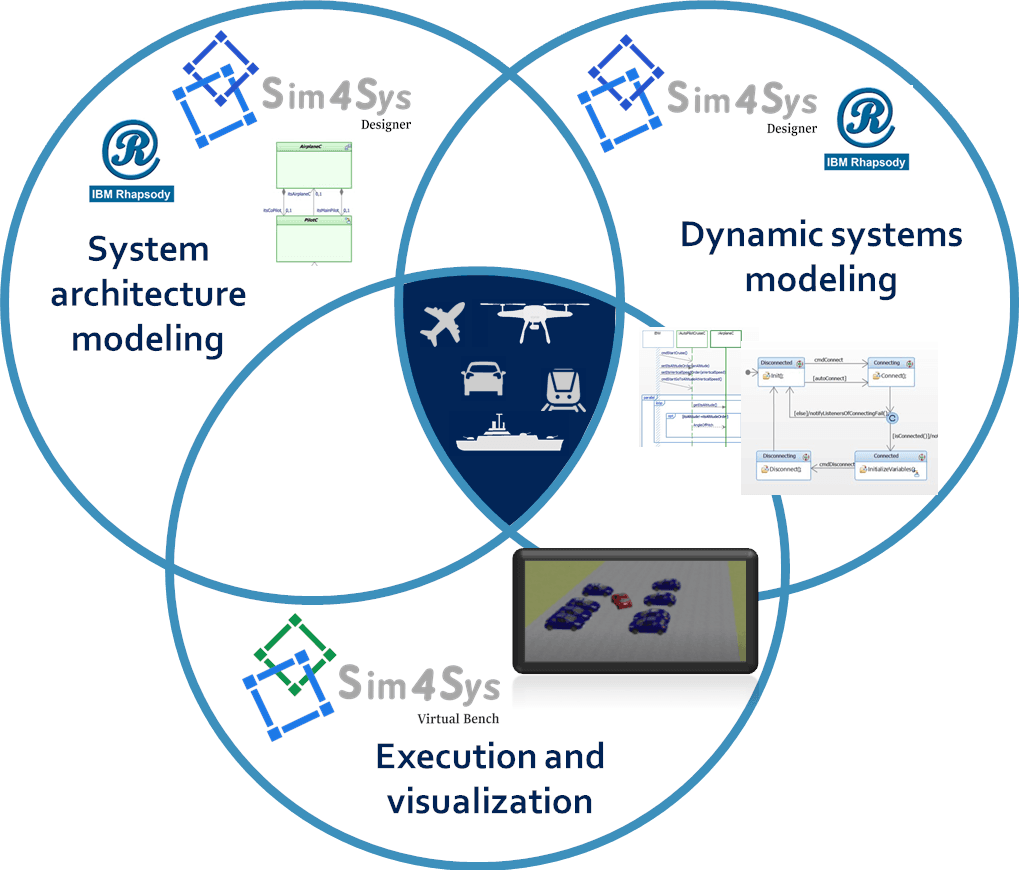
UML with Rhapsody with verification & validation using simulation
Tip
The next session takes place on June 9th, 10th and 11th. You can register today by clicking here
Rhapsody is one of the most globally recognized tools for modeling systems and software in UML and SysML. Its long history makes it arguably the most feature-rich software in the field. To fully leverage its capabilities, proper training is essential.
In this 3-day module, you will learn all the foundational skills needed for an initial use of Rhapsody in systems engineering.

Agile Systems Engineering with Sim4Sys
Tip
This training is not scheduled in the near future. Please, contact us to discuss your specific needs.
Learn how to write system specifications in an agile mode using the Sim4Sys toolchain by modeling in Papyrus with Sim4Sys-Designer, testing your models in the virtual environment Sim4Sys Virtual Bench, and automatically generating your requirements and documents from your models in Sim4Sys-Designer.
After a review of the principles of systems engineering, you will dive straight into system modeling by working hands-on with practical examples.
Software is now everywhere, and using modeling has become essential to designing complex systems with a significant software content. Designing with Sim4Sys ensures a robust, resource-efficient design that meets deadlines.
Following your 3-day training, we will provide weekly support during your first three weeks of practice after the course.
Discover Agile Systems Design with Sim4Sys
Tip
This training is not scheduled in the near future. Please contact us to discuss your specific needs.
Discover how the** functional digital mock-up accelerates** the agile writing of functional specifications for systems of systems. This introductory training, aimed at managers and system engineering team leaders, offers a practical implementation of the "Customer In the Loop" method within the tools to better understand the levers for scaling up MBSE "Model-Based Systems Engineering".
Modeling complex systems using SysML v1
Tip
This training is not scheduled in the near future. Please, contact us to discuss your specific needs.
Introduce participants to the modeling of complex systems using the SysML v1 language within an MBSE approach. The training enables them to understand the foundations of the language, its main diagrams and their interconnections, while developing the ability to structure, analyze, and communicate effectively about systems. Through practical case studies and demonstrations, participants will learn to read, build, and apply SysML models.
Introduction to SysML v1
Tip
This training is not scheduled in the near future. Please, contact us to discuss your specific needs.
Introduce the fundamentals of the SysML v1 language within the context of systems engineering. It enables participants to understand the principles of system-oriented modeling, explore the main SysML diagrams, and grasp their usefulness in representing requirements, behaviors, and architectures.